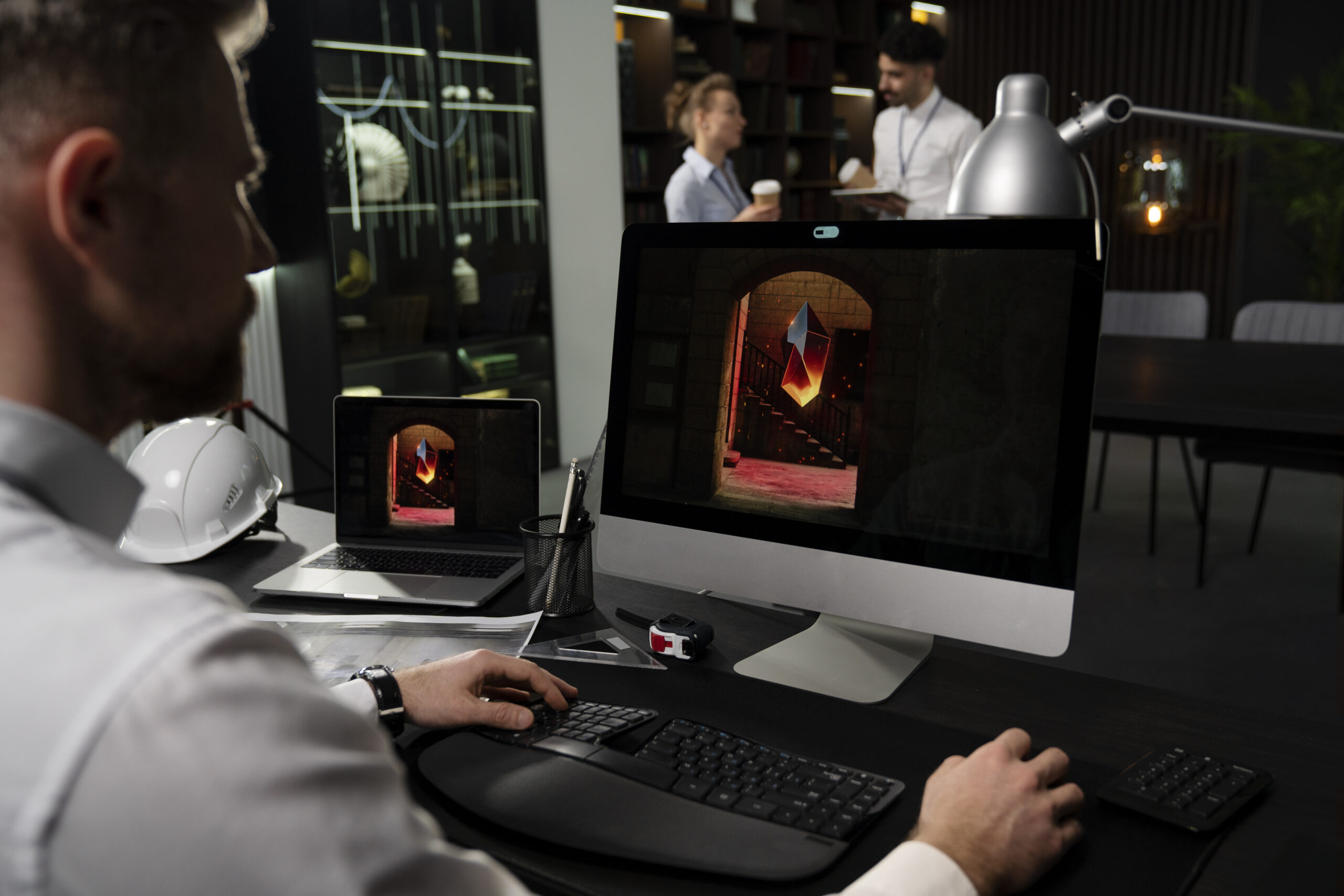
Every visual effects shot you see on screen, whether it is a simple sky replacement or a full digital environment, follows a structured process. That process is called the vfx workflow.
Understanding the workflow is not just useful knowledge. It is a prerequisite for working effectively in any professional production environment. If you want to grow as a VFX artist, knowing how your work fits into the larger pipeline changes everything.
This guide walks you through each stage of the vfx workflow, from initial concept to final delivery, so you can see where each discipline lives and how the pieces connect.
What Is a VFX Workflow?
A vfx workflow is the organized sequence of steps that takes a visual effects shot from idea to finished image. It involves multiple departments, tools, and handoffs, all working toward a single goal: delivering a convincing final frame on time.
The workflow differs slightly between studios and productions, but the core stages are consistent across the industry. You will encounter the same basic structure whether you are working on a streaming series, a feature film, or a broadcast commercial.
Understanding the workflow means understanding the vfx pipeline, which is the technical and organizational framework that keeps everything moving.
Stage 1: Pre-Production and Visual Development
The vfx workflow begins before the camera ever rolls.
During pre-production, VFX supervisors work with directors to identify which shots require digital effects, how complex those effects will be, and what they will cost. Concept artists and pre-visualization teams produce early versions of key sequences so directors can make decisions before expensive production begins.
This stage also includes breakdown analysis, where each shot is categorized by difficulty and assigned to the appropriate department. A clear breakdown is the foundation of a predictable vfx pipeline.
Getting pre-production right saves significant time and money later. Changes made on paper are cheap. Changes made after rendering are not.
Stage 2: On-Set Supervision
When production begins, the vfx workflow moves to set.
A VFX supervisor attends filming to ensure all footage is captured correctly for later digital effects work. This involves placing tracking markers, recording HDRI lighting data, photographing set reference, and advising the camera department on how to shoot for compositing.
Good on-set supervision protects every downstream department. If the camera department shoots a green screen with inconsistent lighting, the compositing team spends weeks fixing a problem that should never have existed.
Every decision made on set either simplifies or complicates the work ahead. This is why experienced supervisors are among the most valued people in a production.
Stage 3: Asset Creation and 3D Visual Effects
Once production wraps, the vfx pipeline shifts into full operation.
Asset creation covers all 3D work required for a project, including modeling, texturing, rigging, and animation. For productions involving 3D visual effects such as simulations, destruction, or creature work, this stage is where the heavy technical lifting happens.
Artists use tools like Houdini for effects simulation and Autodesk Maya for character animation. Assets are reviewed and approved before moving to the next stage, ensuring the vfx pipeline does not carry errors forward.
Simulation work in particular can be time-intensive. A single fluid simulation for a large water sequence may take days to complete and additional time to render. Planning this time into the schedule is essential.
Stage 4: Lighting and Rendering
With assets ready, the lighting department integrates them into each shot.
Lighters use HDRI data and reference photography captured on set to match the look of computer-generated elements to the live-action plate. This is one of the most critical steps in the vfx workflow because a lighting mismatch is immediately visible to the eye.
Rendering converts the 3D scene into a final image. Depending on scene complexity, this can take minutes or many hours per frame. Large productions use render farms with hundreds of machines working in parallel to meet delivery deadlines.
Renders are delivered as separate passes, including beauty, shadow, reflection, and subsurface scattering. These passes give compositors the flexibility to adjust individual elements without re-rendering the full scene.
Stage 5: VFX Compositing
VFX compositing is where everything comes together.
Compositors take the rendered CG passes, live-action plates, matte paintings, and atmospheric effects and combine them into a single unified image. Their job is to make every element feel like it belongs in the same physical space.
In compositing, artists handle tasks like color matching, grain matching, motion blur integration, edge refinement, and lens aberration simulation. Each decision brings the final image closer to photorealism.
Nuke by Foundry is the standard compositing tool for professional productions. Its node-based workflow gives compositors precise control over every element in the comp. Learning Nuke is the most direct path into a professional compositing role.
VFX compositing is the last major creative stage before a shot goes to the client or the editorial team. The quality of the composite determines whether the digital effects hold up on screen.
Stage 6: Review, Revisions, and Final Delivery
No shot ships on the first attempt. Review cycles are built into every vfx workflow.
Completed shots are reviewed by the VFX supervisor, the director, and sometimes the studio or network. Feedback is collected and passed back to the relevant departments for revisions. This cycle repeats until the shot is approved.
Once approved, shots are delivered in the required format for editorial integration. The delivery specifications vary by project, but accuracy matters. A shot delivered in the wrong color space or at the wrong resolution means rework.
Studios use pipeline management tools like Shotgrid to track every shot through the review and delivery process. These tools provide visibility across the entire vfx pipeline so supervisors know exactly where each shot stands at any given moment.
Why Understanding the VFX Workflow Matters for Your Career
Technical skill matters, but context multiplies its value.
An artist who understands the full vfx workflow communicates better with other departments, makes fewer mistakes that affect downstream work, and contributes more effectively to the team. That awareness makes you more hireable and more promotable.
If you are learning VFX through vfx tutorials, study the tools. But also study the process. Understanding where a compositor fits in relation to the lighting department, or why on-set supervision affects the compositing stage, will shape the way you approach your work at every level.
The vfx pipeline is the structure that turns individual contributions into a finished film. Knowing that structure is what separates artists who grow quickly from those who stay in one place.
Start Building Your Knowledge of the VFX Workflow
The workflow described here applies to productions of every scale, from independent films to global blockbusters. The tools change. The software evolves. But the core logic of the vfx pipeline, from pre-production through final delivery, stays consistent.
Start where you are. Pick one stage of the workflow to learn in depth. Build your skills around how that stage connects to the others. That approach will take you further, faster, than trying to master everything at once.